Showing posts with label Nutrition Tips Articles. Show all posts

Tuesday, May 6, 2014

Weight Loss Plans 2014


Let’s show you the right way of weight loss. it’s a combination between Dr Oz Diet plan and exercise. it’s the way you can get a slim body and actual weight loss by developing physical activity besides healthy diet plan. 
you may heard these words ” diet & exercise ” many times before and get bored from them but you need to know that diet means just eating healthy foods and low caloric meals. you need to know too that exercise does not mean going to gem .. just be more active , do more tasks and get a lot of moves.
some people focus only on one of these two categories, focus on diet while they are not active , being active is also necessary to complete the Dr Oz weight loss program and you diet plan. as the activity make your body use over energy. this helps much more than you imagine.
for example ; make the bed , go for shopping , clean the house or any other kind of activity may help you and considered as exercise.
on the other hand, exercise must be regular act and basic part in you day , diet plans depend on repetitive exercise.
whatever what you choose to be you daily exercise, you have to achieve 150 minutes per week in moderate sort of activity with 75 minutes at least per week of vigorous aerobic activity.


BASICS OF WEIGHT LOSS

The equation that balance your weight includes calories , exercise and metabolism inside the body. " eating carbs and large amount of grapefruits will make pounds off" fad diets promises that. But when we need to lose weight we must count the income of calories and it must be lower than the calories burned. Dr Oz Weight Loss will be inhanced by increase the gab between caloric income and outcome. this can be achieved by reduce the high caloric diet with increase the hard exercise to increase the caloric outcome.
 
Basics of weight loss 
The equation : increase exercise + decrease calories income = weight loss
You can completely understand this simple equation. then you are ready to set your own Dr Oz weight loss plan. you may also ask for advise from your doctor. remember to take support from friends, family, and work partners. the great support you can gain by getting a partner in your weight loss plan. finally you have to anticipate how you will handle situations that challenge your resolve and the inovitable minor setbacks. other ways to lose weight as medications and surgery are recommended if the obesity causes a health problem. you have to visit your doctor and discuss with him that issue.
Don't forget : the base line in any successful weight loss plan is making changes in exercise and Dr Oz Diet habits.


! How to choose a good diet plan

When we talk about Dr Oz Weight Loss, there is no shortage of diet plans. look at any magazine rack, you will find all latest and greatest diet plans. the problem is how to choose the diet plan which fits to your lifestyle and needs.
Dr Oz Weight Loss
Dr Oz Weight Loss
To choose the best Dr Oz Diet plan , it must include these conditions :
*It musr fits to your lifestyle as we said before.
*It must contain regular physical activity part.
*It must includes enough amount of nutrients and many types of foods with low caloric sum.
*Your favorite food must be included in small amount.
*Foods in that Dr Oz Diet plan should be found easily in a local grocery store.
*It must include foods from major food groups such as vegetables, fruits, low fat dairy products, lean protein, grains and nuts.
finally you should feel comfortable to that diet plan to choose it.
Good Luck!


Tuesday, December 10, 2013

5 Foods for Better Health

5 Foods for Better Health

1. Whole Soy Foods (Serving size: 1-2 servings a day) 
When you’re shopping, look for whole soy foods over isolated soy protein powders like fake meats with soy isolate. Try eating tofu, tempeh, soy milk, edamame and soy nuts. They’re good sources of protein and help guard against hormonally driven cancers, such as prostate cancer and breast cancer.

2. Cooked Asian Mushrooms (Serving size: Unlimited) 
Mushrooms contain immune system boosting compounds, helping to prevent illness. At less than 100 calories per cup, they’re good for your diet too. But be careful, you’ll lose the benefits if they’re not cooked well. Here are some varieties to try: shitake, maitake, oyster and enoki.

3. Whole and Cracked Grains (3-5 servings a day; 1 serving is 1/2 cup cooked)
The good types of whole grain products are ones where you can actually see the grain or large chunks of grain. These foods won’t raise blood sugar the way products made with flour and sugar do. Stock up on basmati rice, wild rice, brown rice, buckwheat, barley, groats and quinoa.

4. Cruciferous Vegetables (Serving size: Unlimited)
Cruciferous vegetables belong to the cabbage family. What’s great about these greens is that they protect against cancer. Look for cabbage, cauliflower, broccoli, bok choy, kale and brussels sprouts.

5. Healthy Fats (5-7 serving a day; 1 serving is equal to 1 teaspoon of oil)
Not all fats are bad for you – some types actually protect your heart, like omega-3 fatty acids. If you’re looking to increase your intake of good fats and cut out the bad ones, make sure you add these to your grocery list: hemp seeds, flaxseeds, walnut oil, olive oil, hazelnut oil and omega-3 eggs.


Saturday, December 7, 2013

10 Cheap and Easy Ways to Eat Healthy

10 Cheap and Easy Ways to Eat Healthy

1. Choose fresh or frozen over canned.
For veggies, soups, and beans, nixing the can cuts out unnecessary sodium. For fruit, it avoids excess sugar. Plus, the fresh stuff always tastes better. And, perhaps surprisingly, canned produce can actually end up costing more (or at least the same amount) as the fresh stuff!

2. Make a grocery list (and stick to it).
By heading to the store with a clear list of what's necessary, it's much easier to avoid last-minute purchases. (Some studies say shoppers may still make impulsive buys… but the list can't hurt.) Feeling techy? Try one of the many apps that can help with shopping, like GroceryIQ or Shopper.

3. Eat naturally sweet food (and don't add extra sugar to it!).
Some of us have a sweet tooth, but instead of indulging in sugar-packed processed foods, choose naturally sweet ones to cut down on sugar cravings later. Start in the fruit section and choose naturally sweet vegetables like beets, corn, and sweet potatoes (just to name a few!).

4. Don’t go shopping hungry.
Even after you take the time to write a meticulous grocery list, if that stomach is grumbling so loudly the people in the next aisle can hear it, chances are something surprising’s going to jump into the shopping cart. Avoid succumbing to last-minute cravings (like, say, for lardwiches) by eating a healthy snack (or meal) before heading to the store.

5. Buy in bulk and divide into portions.
Yes, this strategy is mostly a way to cut down on cost. But buying in bulk — anything from vegetables, to meat, to grains — can also cut down on shopping time, so there’s more time left to prepare healthy meals.

6. Pre-package snacks.
When eating out of a family-sized potato chip bag, it's easy to keep reaching that hand in until all that's left are the greasy crumbs. Instead of wasting away in a bottomless pit of chips, try pre-portioning snack foods into single-serving plastic baggies or reusable containers.

7. Grow your own herbs.
Fresh herbs (or freshly dried ones) are a great way to season food without excess salt, butter, or cheese. Growing a personal herb garden isn't only good for that belly — it's also an easy way to pretty up any space! All that’s necessary for a DIY herb garden is a few small planters and an empty windowsill (even the Greatist office has one!).

8. Forget about counting calories.
Checking every nutrition label before chowing down is annoying (to say the least). Instead focus on meals that include a variety of nutrients, colors, and fresh ingredients. It's much easier to keep a healthy, balanced diet this way than by counting calories.

9. Replace dessert with fruit.
(…Or at least add fruit to dessert.) While some varieties can be high in sugar, fruit is a great way to satisfy that sweet tooth without breaking the sugar bank. Plus, it offers health benefits typical desserts can't, like fiber and antioxidants. And opting for fruit can help avoid that dreaded sugar crash.

10. Pace your mealtime.
When we eat quickly, our bodies don’t always have time to realize we’re full — so it’s easy to overeat [9]. Enjoy what's on the plate, and stop eating as soon as that stomach gives the first hint of being full. It's always possible to eat more later.


Thursday, December 5, 2013

5 Foods Even the Experts Won't Eat

5 Foods Even the Experts Won't Eat

Clean eating means choosing fruits, vegetables, and meats that are raised, grown, and sold with minimal processing. Often they're organic, and rarely (if ever) should they contain additives. But in some cases, the methods of today's food producers are neither clean nor sustainable. The result is damage to our health, the environment, or both. So we decided to take a fresh look at food through the eyes of the people who spend their lives uncovering what's safe or not to eat. We asked them a simple question: "What foods do you avoid?" Their answers don't necessarily make up a "banned foods" list. But reaching for the suggested alternatives might bring you better health and peace of mind.

1) The Farmer Won't Eat: Corn-Fed Beef
Joel Salatin is co-owner of Polyface Farms and author of half a dozen books on sustainable farming.

The problem: Cattle evolved to eat grass, not grains. But farmers today feed their animals corn and soybeans, which fatten up the animals faster for slaughter. But more money for cattle farmers (and lower prices at the grocery store) means a lot less nutrition for us. A recent comprehensive study conducted by the USDA and researchers from Clemson University found that compared with corn-fed beef, grass-fed beef is higher in beta-carotene, vitamin E, omega-3s, conjugated linoleic acid (CLA), calcium, magnesium, and potassium; lower in inflammatory omega-6s; and lower in saturated fats that have been linked to heart disease. "We need to respect the fact that cows are herbivores, and that does not mean feeding them corn and chicken manure," says Salatin.

The solution: Buy grass-fed beef, which can be found at specialty grocers, farmers' markets, and nationally at Whole Foods. It's usually labeled because it demands a premium, but if you don't see it, ask your butcher.

2) The Farm Director Won’t Eat: Nonorganic Potatoes
Jeffrey Moyer is the chair of the National Organic Standards Board. The problem: Root vegetables absorb herbicides, pesticides, and fungicides that wind up in soil. In the case of potatoes–the nation’s most popular vegetable–they’re treated with fungicides during the growing season, then sprayed with herbicides to kill off the fibrous vines before harvesting. After they’re dug up, the potatoes are treated yet again to prevent them from sprouting. “Try this experiment: Buy a conventional potato in a store, and try to get it to sprout. It won’t,” says Moyer, who is also farm director of the Rodale Institute (also owned by Rodale Inc., the publisher of Prevention). “I’ve talked with potato growers who say point-blank they would never eat the potatoes they sell. They have separate plots where they grow potatoes for themselves without all the chemicals.”

 The solution: Buy organic potatoes. Washing isn’t good enough if you’re trying to remove chemicals that have been absorbed into the flesh.Budget tip: Organic potatoes are only $1 to $2 a pound, slightly more expensive than conventional spuds.

3) The Biotech Specialist Who Won't Eat Convenional Soy: GMO Unfermented Soy
Michael Harris is biotech specialist who has directed several projects within the biotech sector including those for genetically engineered food. He has been a consultant, manager and director for companies such as Xenon Pharmaceuticals and Genon Corporation.

The problem: Genetically engineered food is a cause of great concern due to the manipulation of DNA and genetic code including transfers from one species to another. Fermented Soy Is The Only Soy 
Food Fit for Human Consumption and since almost 90% of soy in the world is genetically modified, if you are not ensuring sources are organic, long-term health problems are inevitable, especially since soy has been found to affect hormonal balance and even cause cancer.

The solution: Check labels to ensure soy is Non-GMO or organic and never consume unfermented sources. If possible contact the company to find out exactly where the Non-GMO soy was obtained.

4) The Endocrinologist Won't Eat: Canned Tomatoes
Fredrick Vom Saal, is an endocrinologist at the University of Missouri who studies bisphenol-A.

The problem: The resin linings of tin cans contain bisphenol-A, a synthetic estrogen that has been linked to ailments ranging from reproductive problems to heart disease, diabetes, and obesity. Unfortunately, acidity (a prominent characteristic of tomatoes) causes BPA to leach into your food. Studies show that the BPA in most people's body exceeds the amount that suppresses sperm production or causes chromosomal damage to the eggs of animals. "You can get 50 mcg of BPA per liter out of a tomato can, and that's a level that is going to impact people, particularly the young," says vom Saal. "I won't go near canned tomatoes." 

The solution: Choose tomatoes in glass bottles (which do not need resin linings), such as the brands Bionaturae and Coluccio. You can also get several types in Tetra Pak boxes, like Trader Joe's and Pomi. Exposure to BPA Causes Permanent Damage In OffSpring

5) The Cancer Researcher Won't Drink: Milk Produced With Artificial Hormones
Rick North is project director of the Campaign for Safe Food at the Oregon Physicians for Social Responsibility and former CEO of the Oregon division of the American Cancer Society.

The problem: Milk producers treat their dairy cattle with recombinant bovine growth hormone (rBGH or rBST, as it is also known) to boost milk production. But rBGH also increases udder infections and even pus in the milk. It also leads to higher levels of a hormone called insulin-like growth factor in milk. In people, high levels of IGF-1 may contribute to breast, prostate, and colon cancers. "When the government approved rBGH, it was thought that IGF-1 from milk would be broken down in the human digestive tract," says North. "There's not 100 percent proof that this is increasing cancer in humans," admits North. "However, it's banned in most industrialized countries."

The solution: Buy raw milk or check labels for rBGH-free, rBST-free, produced without artificial hormones, or organic milk. These phrases indicate rBGH-free products. Why Do Humans Still Drink Milk?


Monday, November 25, 2013

7 Quick and Easy Healthy Breakfasts

7 Quick and Easy Healthy Breakfasts

1) Bircher muesli

7 quick and easy healthy breakfasts

Soak oats in milk overnight, with almonds, sunflower and pumpkin seeds. Then in the morning stir through some strawberries, blueberries, grated apple, and natural yoghurt. Bircher is packed with dietary fibre and antioxidants, together with beneficial fats and calcium.

2) Whole oat porridge

7 quick and easy healthy breakfasts

Whole oat porridge with almond milk, diced pear and banana, cinnamon, almond flakes, chia seeds and a drizzle of raw honey. Oats are rich in beta-glucan, a type of soluble fibre that is beneficial for reducing cholesterol levels.

3) Poached eggs on wilted spinach and grainy toast

7 quick and easy healthy breakfasts

Poached eggs with handful of baby spinach, salt-reduced baked beans with a piece of grainy toast. Baked beans are a great source of iron, B vitamins and fibre. Baby spinach is full of beta-carotene, vitamin K and folate.

4) Spelt toasted sandwich

7 quick and easy healthy breakfasts

Spelt toasted sandwich filled with avocado, a fried egg, rocket and tomato relish. Eggs make a fabulous breakfast that provides you with plenty of protein, zinc, and iron. Avocado is an excellent source of the antioxidant vitamin E and beta-carotene.

5) Green vegie juice


Green vegie juice made with baby spinach, parsley, celery, cucumber, apple, lime, and avocado. Add a teaspoon of spirulina for extra protein and nutrients. Rich in antioxidants, this super smoothie is a great way to start the day.

6) Fruit smoothie


Smoothie made with organic milk, frozen raspberries and a banana, yoghurt, LSA and chia seeds, 2 dates, and 2 Tbsp of protein powder (eg. fermented brown rice, pea protein, or whey). This is a great breakfast that you can take with you when you are short for time. This protein-rich smoothie will help keep your blood sugar levels balanced and prevent you from cravings sweets during the day.

7) Muesli and yoghurt breakfast cups


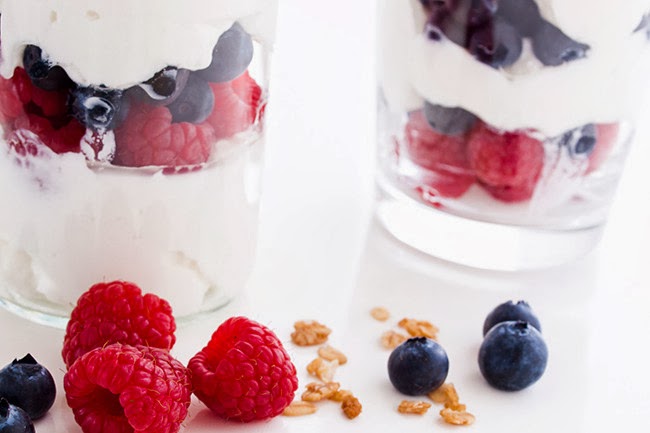
In a glass add layers of muesli, organic yoghurt, and berries. Then top with crushed mixed nuts and some shredded coconut. Yoghurt is full of beneficial bacteria that helps boost your good intestinal flora, which in turn supports your immune and digestive health.

References and Sources : Body and Soul


Feedage Grade A rated Weight Loss Quotes